
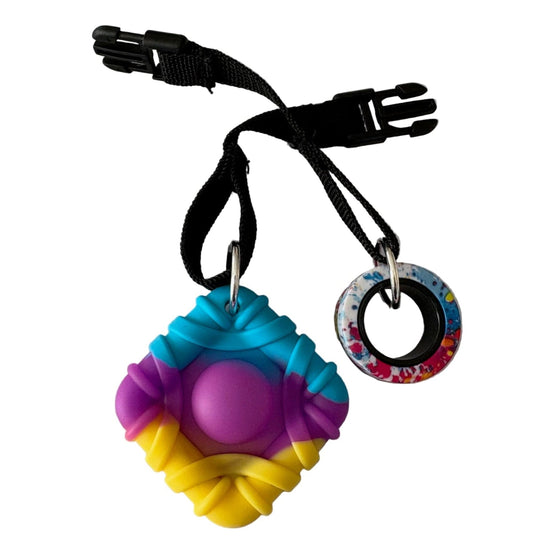
Quiet, purposeful movement:
-
Helps regulate the nervous system
-
Is intentional (not impulsive or chaotic)
-
Allows the child to stay engaged in the task
-
Blends in with typical classroom or home routines
It’s movement with a job.
Quiet, Purposeful Movement at School
Seated Movement
-
Gently bouncing feet under the desk
-
Slow leg squeezes or ankle crosses
-
Pressing feet firmly into the floor
-
Quiet hand fidgets kept below desk level
Hands-On Regulation
-
Squeezing a stress ball or therapy putty
-
Twisting a pencil topper or textured ring
-
Folding a small piece of paper while listening
-
Holding a smooth stone or fabric square
Purposeful Classroom Jobs
-
Passing out papers
-
Wiping desks
-
Carrying books or supplies
-
Standing to read aloud instead of sitting
Built-In Movement Breaks
-
Short stretch before or after a lesson
-
Walking to a specific spot to turn in work
-
Standing while listening to instructions
Quiet, Purposeful Movement at Home
Seated or Floor-Based Movement
-
Sitting on a cushion or wobble seat
-
Gentle rocking while reading
-
Wrapping legs around a chair rung
-
Lying on the floor with feet up the wall
Hands-Busy Activities
-
Playing with putty, slime, or kinetic sand
-
Sorting small objects (buttons, coins, beads)
-
Drawing or coloring while listening
-
Braiding string or yarn
Heavy Work (Calming & Grounding)
-
Carrying laundry or groceries
-
Pushing a vacuum or mop
-
Wall push-ups or plank holds
-
Animal walks down the hallway
Everyday Functional Movement
-
Setting or clearing the table
-
Feeding pet
-
Folding laundry
-
Watering plants
Why These Movements Work
Quiet, purposeful movement:
-
Provides sensory input without distraction
-
Helps the brain stay alert and organized
-
Reduces the need for constant redirection
-
Supports independence and self-regulation
For many kids, movement is the pathway to focus, not a barrier to it.
How to Introduce It (Without Making It a “Thing”)
-
Offer choices: “Would movement or stillness help right now?”
-
Normalize it: “Different bodies focus in different ways.”
-
Keep it discrete: tools stay below desk level
-
Check in privately, not publicly
Bottom Line
Quiet movement isn’t a loophole…It’s a strategy.
When we stop fighting children’s bodies and start working with them, focus comes more naturally and learning lasts longer.